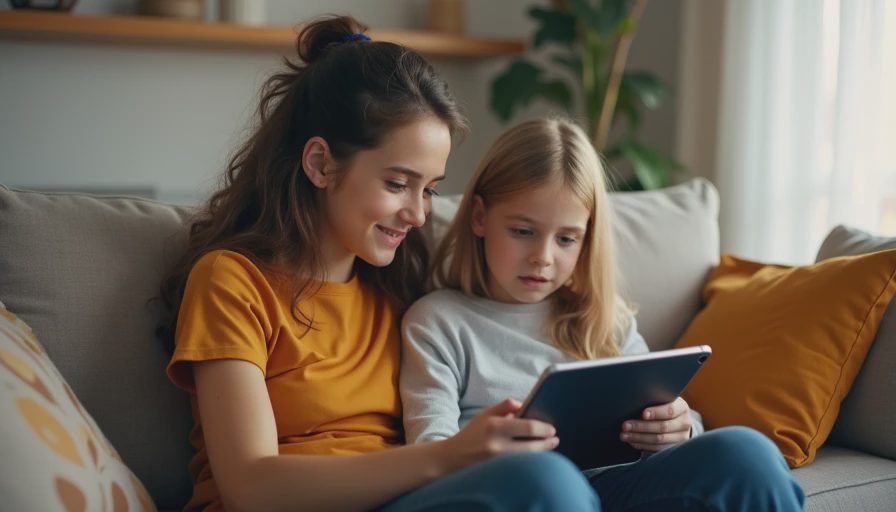
YouTube is not just a library of videos. For many children and teens it is an autoplay engine, a social feed, and a bottomless supply of short-form clips designed to keep the next one loading before the current one fully ends. The “just one more” feeling is not a personal failure of willpower. It is the predictable result of a system optimized for continuous watching.
Parents often try to solve the problem with a single screen-time number. That number matters, but it is rarely the first lever that actually changes the experience. What changes the loop faster is a small set of concrete adjustments to how the platform is set up, when it is used, and what the family has agreed to do when the urge to keep going appears.
This post focuses on the highest-leverage changes to make first.
Why the “just one more” loop is so hard to break with willpower alone
The platform is built to remove stopping cues
Autoplay, endless Shorts, personalized recommendations, and the absence of a natural ending all work against the brain’s ability to notice “I have had enough.” A child is not simply choosing poorly; they are operating inside an environment that makes stopping feel unnatural.
Short-form content shortens the decision window
A three-hour movie has built-in pauses and a clear finish. A stream of 15- to 60-second clips does not. The next decision point arrives before the previous reward has even settled. That speed is why Shorts and similar feeds produce a different kind of stuckness than longer videos.
Tired brains and unstructured time make the loop stronger
The same child who can stop after two videos at 4 p.m. may struggle badly at 8:30 p.m. or during an open-ended weekend afternoon. Timing and context are part of the problem, not just total minutes.
What to change first: four high-leverage adjustments
1. Turn off the features that remove stopping points
Before you argue about total time, reduce the platform’s ability to keep the feed going by itself.
Practical steps that help most families:
Disable autoplay in YouTube settings.
Limit or pause Shorts if the loop is mainly happening there.
Switch younger children to YouTube Kids only if that version still fits their content needs and your supervision level.
On shared or family devices, use the most restricted profile available.
These changes do not require constant parental enforcement. They alter the environment so that stopping becomes a little more natural.
2. Move YouTube out of the highest-risk time windows
The same amount of YouTube is far more likely to create conflict and sleep loss when it happens late in the evening or in bed. Shift the bulk of viewing earlier and keep the last 60–90 minutes before bed clearer of open-ended feeds.
A simple family rule many households can sustain:
Open-ended YouTube and Shorts end at a set evening time.
If a specific video is needed later (homework, a tutorial, a family show), it is chosen in advance rather than discovered through the recommendation feed.
3. Replace “one more” with a clear stopping agreement
“Just one more” is vague and therefore endless. Replace it with a concrete, pre-agreed stopping method.
Examples that work better:
“Two more videos, then it’s done.”
“When this video ends, we stop—no clicking the next one.”
“Fifteen more minutes on the timer, then the device goes to the charger.”
The key is that the stopping point is named before the session begins, not negotiated at the moment of peak engagement.
4. Create a short “pause and choose” habit
When the urge to continue appears, teach a brief interruption:
Pause the video or close the Shorts feed.
Ask: “Do I still want another one, or am I just in the loop?”
Decide and act—either stop or take the pre-agreed extra amount and then stop.
This is a small version of the same pause skill used for scams and other impulse moments. It is more useful than a lecture about self-control delivered after the fact.
How to talk about it without starting another fight
Keep the focus on the design, not the child’s character
Helpful framing:
“YouTube is built to make the next video feel necessary. That is why we are changing the settings and the timing, not because you are bad at stopping.”
Less helpful:
“You have no self-control. You always do this.”
The first version invites cooperation. The second version invites defensiveness.
Use a short joint setup session
Sit together for ten to fifteen minutes and make the setting changes as a team. Let your child click the toggles where possible. Explain what you are turning off and why. End by writing the new stopping agreement in one or two sentences.
Separate content concerns from loop concerns
You can dislike both the endless loop and certain types of content. For this conversation, stay on the loop. Mixing every frustration into one talk usually produces overwhelm and less change.
Adjustments by age and situation
Ages 8–11
Rely more on environmental changes (YouTube Kids, autoplay off, earlier time windows, parent-managed stopping points). The coaching language can be simple and repeated: “When the timer ends, we are done.”
Ages 12–14
Combine settings changes with a clearer personal agreement. Many children this age can understand the design explanation and participate in choosing the stopping method. Keep the overnight and late-evening rules firm.
Ages 15–16
Shift toward joint problem-solving. Ask what part of the loop is hardest and what change they think would help. Still maintain non-negotiables around sleep and any content rules your family holds. Review the arrangement on a set date.
When YouTube is mainly Shorts
Treat it more like a social feed than like traditional video watching. Time limits alone are weaker here; settings changes and defined session endings matter more.
What to do when the loop keeps winning
Look at the larger evening structure
If open-ended device time is the main available activity after homework and dinner, the loop has very little competition. Adding one predictable non-screen option (even a simple one) often reduces the intensity of the fight over YouTube.
Tighten one variable at a time
Change settings first. Then stabilize the evening cut-off. Then practice the pre-agreed stopping method. Trying to overhaul everything in a single night usually collapses under its own weight.
Use repair, not only restriction, after a bad night
If the agreement is broken, apply the related consequence you already decided, then have a short next-day conversation: “What made it hard to stop? What should we adjust so tomorrow is cleaner?” Keep it brief.

What to do this week
Pick one primary change from the list above—usually disabling autoplay and Shorts auto-play, or moving the bulk of YouTube earlier in the evening. Make the change together with your child in a short session. Write the new stopping agreement in one sentence and decide when you will review it (two to three weeks is realistic). Then hold the new pattern as consistently as you can for the next fourteen days.
You will not eliminate the pull of the feed. You can make the stopping points more visible and the evenings less contested.
Coach the skill, not just control the screen.
The goal is not a perfect digital childhood.
It is a child who can make better choices.
Start with the next conversation, not the next restriction.


No letters yet — be the first guest to write.