
The overnight location of the phone is one of the highest-leverage, lowest-drama boundaries most families can set. It protects sleep, reduces late-night social pressure, and creates a natural daily reset. It is also one of the rules that generates the most pushback, because the phone has already become a companion, an alarm clock, a social lifeline, and a source of comfort.
There is no single correct charging spot that works for every household. What works is a setup that matches your child’s age and temperament, your home layout, and the adults’ actual capacity to hold the boundary consistently. Below are three practical setups, the families they tend to fit, and how to introduce each one without turning bedtime into a nightly negotiation.
Why the overnight location matters more than many other rules
Sleep is the foundation the rest of digital life sits on
A phone in the bedroom makes it easy for notifications, the urge to check one more message, or simple scrolling to push bedtime later and later. Over time, the cost shows up in mood, focus, and the ability to handle ordinary frustration the next day.
The bedroom removes the social brake
When the phone is behind a closed door, the only person enforcing the family’s agreements is a tired child. Moving the device to a shared space restores a light external structure without requiring constant parental policing.
A consistent charging spot creates a daily ritual of separation
The act of plugging the phone in outside the bedroom becomes a clear signal: the social day is over. That ritual is easier to maintain than a vague “don’t use it after 9:30.”
Setup 1: The shared family charging station
Who this setup fits
This works well for most families with children 10–14, especially when there are multiple devices in the house or when parents want a simple, visible system. It also suits households where the adults are willing to model the same behavior with their own phones.
How it works
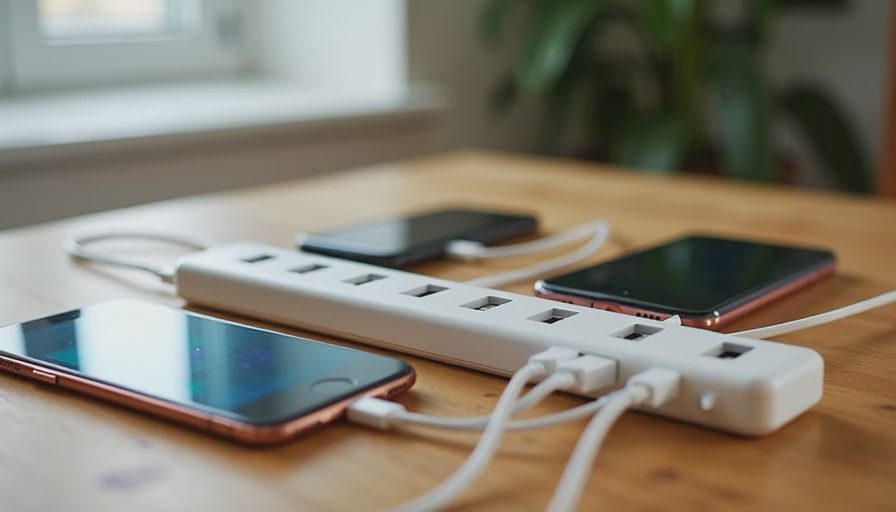
Choose one accessible location—kitchen counter, entry table, or a small shelf in a hallway—and make it the overnight home for every child’s phone. A simple power strip or multi-charger keeps the area from becoming chaotic. Phones are plugged in at an agreed time (for example, 9:00 or 9:30 p.m. on school nights) and stay there until morning.
Strengths
The rule is easy to see and easy to enforce. It applies the same expectation to every child. It removes the need for parents to enter bedrooms for device checks. It creates a natural moment for a brief “how was the evening?” exchange if desired.
Common friction and how to handle it
Children often argue that they need the phone as an alarm. Solution: buy an inexpensive standalone alarm clock or use a parent’s old phone with airplane mode and alarms only. Another objection is “what if someone needs to reach me?” Solution: the house phone, a parent’s phone, or a clear exception process for true emergencies. Consistency in the first two weeks matters more than perfect buy-in on night one.
Setup 2: The parent-bedroom or parent-managed overnight hold
Who this setup fits
This is often the better fit for younger children (10–12), for kids who have repeatedly broken a shared-station rule, or for families in the early months of the first phone when trust is still being built. It also works when the home layout makes a shared station impractical.
How it works
The phone is handed to a parent at the agreed time and charges in the parent bedroom or another adult-only space. It is returned in the morning. The hand-off can be paired with a short, neutral routine: “Phone time is over; see you in the morning.”
Strengths
It provides the strongest protection for sleep and the clearest external structure. It is useful when a child is still learning to disengage or when late-night contact with peers has already become a problem. It keeps the boundary fully under adult control during the highest-risk hours.
Common friction and how to handle it
Some children experience this as a high level of control and may escalate. Keep the tone matter-of-fact rather than punitive: the rule is about sleep and habit, not about distrust of the child’s character. Offer a clear path to more independence: “When we have four consistent weeks of easy hand-offs and no late-night issues, we can try the kitchen charging station.” Avoid using the overnight hold as an impulsive extra punishment; keep it as a structural rule.
Setup 3: The bedroom charge with strong compensating agreements
Who this setup fits
This is most realistic for older teens (14–16) who have already demonstrated solid sleep habits, consistent honesty, and the ability to stop using the phone when they say they will. It can also be a later-stage arrangement after a child has succeeded with Setup 1 or 2 for a meaningful period.
How it works
The phone may charge in the bedroom, but only under explicit compensating conditions. Typical conditions include:
Do Not Disturb or Focus mode scheduled every night.
The phone is placed face down and out of arm’s reach (across the room or on a dresser).
No notifications from social or messaging apps overnight.
A clear, short consequence if the agreement is broken (for example, returning to a shared charging station for two weeks).
Periodic check-ins to confirm sleep is still protected.
Strengths
It respects growing autonomy and reduces the feeling of being treated like a younger child. For teens who genuinely use the phone as an alarm and have shown good self-regulation, it can reduce power struggles.
Common friction and how to handle it
The main risk is silent erosion: the phone gradually moves closer to the pillow, Focus mode gets turned off, and late-night use returns. Schedule a review every four to six weeks. If sleep or honesty declines, move back to Setup 1 without framing it as a total failure—simply as data that more structure is currently needed.

How to choose and introduce the setup in your family
Match the setup to current reality, not to the ideal future
If your child is new to a personal phone, has already shown difficulty stopping at night, or if the adults are exhausted, start with more structure (Setup 1 or 2). You can always loosen later. Starting too loose and then tightening often feels more punitive.
Introduce the change as a family decision, not a sudden punishment
Frame it around sleep and long-term skill: “We are going to try a clearer overnight system so everyone’s brain gets real rest. We will review how it is working in three weeks.” If the change is happening after repeated problems, still keep the language about the system rather than about the child’s failure.
Decide the details in advance
Agree on the exact time, the exact location, what happens if the phone is not there, and what the path to more independence looks like. Ambiguity invites nightly renegotiation.
Model what you can
If parents also charge phones outside the bedroom, the rule lands with more credibility. If that is not realistic, be honest about the difference without over-explaining.
What to do this week
Look at your current overnight pattern and choose the setup that best matches your child’s present skills and your household’s capacity. Write down the time, the place, and the first review date. Have a short conversation with your child that covers the “why,” the logistics, and the path to more freedom later. Then hold the line calmly for the next fourteen nights. Consistency in the beginning does more work than a perfect long-term policy.
The overnight charging rule is not about winning a power struggle. It is about protecting the sleep and the daily reset that make every other digital skill easier to practice.
Coach the skill, not just control the screen.
The goal is not a perfect digital childhood.
It is a child who can make better choices.
Start with the next conversation, not the next restriction.
No letters yet — be the first guest to write.