
The phone is already in your hand, or you are seconds away from taking it. Your teen broke a clear agreement—stayed on past the agreed time, installed an app without asking, hid a conversation, or ignored the overnight charging rule for the third time this month. The familiar surge of frustration is here, and the fastest available move feels like confiscation.
Pause.
What you do in the next five to ten minutes often matters more than the consequence itself. A rushed confiscation can end the immediate problem and simultaneously teach your child that honesty is dangerous and that repair is unavailable. A short, deliberate sequence—before the phone leaves their possession—keeps the relationship intact while still holding the boundary.
This is the sequence.

Why the first reaction matters more than the consequence
Confiscation without conversation trains secrecy
When the only predictable outcome of a broken rule is losing the device, many teens simply get better at not getting caught. The rule stays on paper; the real curriculum becomes concealment.
Escalation without repair damages trust faster than the original mistake
A long lecture, a sweeping “you’ve lost it for a month,” or a public shaming in front of siblings rarely produces lasting judgment. It produces resentment and a child who stops bringing problems to you.
A brief pause creates space for coaching
You still get to enforce the boundary. You simply do it in a way that leaves the door open for the skill you actually want: ownership, repair, and a slightly better choice next time.
The four steps to take before the phone is removed
Step 1: Regulate yourself first
You cannot coach effectively while flooded. Take sixty seconds. Put the phone down if you are already holding it. Breathe. Remind yourself of the longer goal: a child who can eventually manage the device without constant external control. The rule still matters. Your nervous system state also matters.
If you need a longer pause, say so out loud: “I’m too angry to do this well right now. We are going to talk about this in twenty minutes. The phone stays with me until then.” That single sentence models emotional regulation and still protects the boundary.
Step 2: Name the specific broken agreement—nothing more
Keep the opening factual and narrow.
Helpful: “We agreed the phone charges in the kitchen by 9:30. It was still in your room at 11:00.”
Less helpful: “You never listen. You always do this. I can’t trust you with anything.”
The first version stays on the observable fact. The second version invites a defensive war about character. Stay with the fact.
Step 3: Require a short ownership statement before any consequence
Ask one clear question and wait.
“What part of the agreement did you break?”
Or: “Tell me what happened, starting from when you decided to keep the phone past 9:30.”
You are looking for basic ownership, not a perfect apology or a deep psychological insight. If your teen minimises or deflects, calmly repeat the request once. If ownership still does not come, you can proceed to the consequence while noting that the repair conversation remains open later. Do not chase a forced confession; it has little coaching value.
Step 4: Apply a related, time-limited consequence and schedule the repair talk
Choose a consequence that connects to the broken rule and has a clear end point.
Examples:
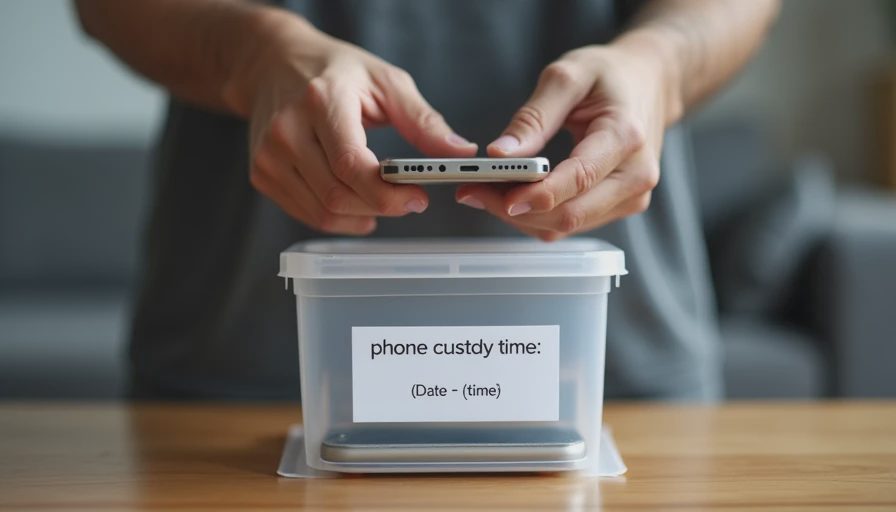
Overnight charging rule broken → phone charges with you for the next five nights and returns to the regular spot afterward.
App installed without conversation → app is removed and a short “new app” conversation is required before any future installs for the next two weeks.
Screen-time limit ignored → earlier device-off time for the remainder of the week.
Then say: “We are also going to have a ten-minute repair conversation tomorrow after school. The point is not more punishment. The point is figuring out what will help this go better next time.”
Write the repair time down if needed. Follow through.
What the repair conversation should actually cover
Keep it short and structured. Fifteen minutes is plenty.
Three questions that move the skill forward
What made it hard to stick to the agreement in the moment?
What will you try differently next time?
What, if anything, do you need from us so the agreement is more doable?
Listen more than you lecture. If your teen offers a realistic adjustment (a reminder system, a clearer wind-down routine, a slightly different charging location that still meets the sleep goal), consider it. Flexibility on the how is not the same as abandoning the what.
End by restating the current agreement and the next review date. Then stop talking about it.
Common traps to avoid in the heat of the moment
Trap: Expanding the consequence to every device and every privilege
One broken phone rule does not automatically justify removing the school Chromebook, the shared family tablet, and weekend plans. Over-reaching teaches the child that the parent is unpredictable. Stay related and proportionate.
Trap: Demanding immediate perfect remorse
Some teens need time before they can speak without defensiveness. Ownership can come the next day. Demanding it on the spot often produces only empty words.
Trap: Skipping the repair conversation entirely
Consequence without repair is pure control. Repair without any consequence can feel like the rule did not matter. You need both.
Trap: Turning the moment into a character verdict
“You are irresponsible” or “You clearly can’t handle a phone” shuts down learning. Describe the behavior and the broken agreement. Leave identity statements out.
Adjusting for different ages and temperaments
A 11-year-old may need more scaffolding and shorter consequences. A 15-year-old can usually handle a more direct ownership conversation and a slightly longer loss of privilege. A highly sensitive or anxious teen may shut down if the initial confrontation is too intense; a written note or a postponed conversation can work better. A strong-willed teen may test whether you will actually follow through—calm consistency matters more than volume.
The four-step sequence still applies. Only the tone, timing, and length of consequence change.
What to do the next time it happens
You will not execute this perfectly every time. You will sometimes confiscate first and coach later. When that occurs, you can still circle back: “I took the phone last night because I was too angry to do it well. Today I want to have the conversation we skipped.”
That repair of your own process models exactly the skill you are trying to teach.
The phone will be taken sometimes. The more important question is whether the child learns anything useful before, during, and after it is taken.
Coach the skill, not just control the screen.
The goal is not a perfect digital childhood.
It is a child who can make better choices.
Start with the next conversation, not the next restriction.

No letters yet — be the first guest to write.